
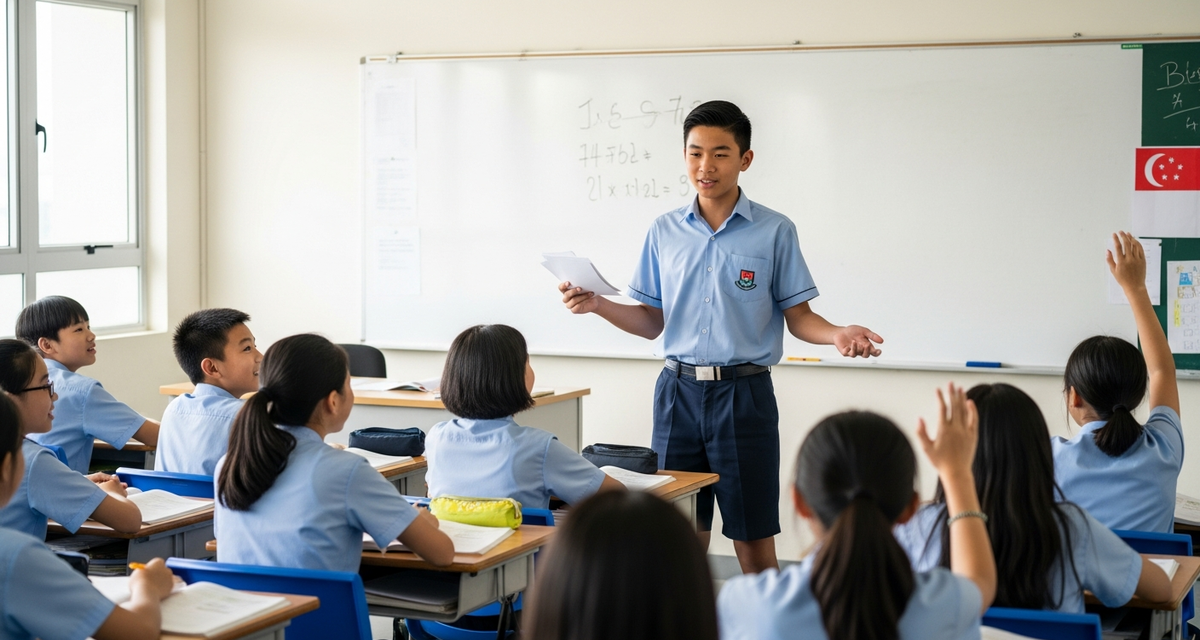

Why Grade 6 Is a Critical Year for Speaking Skills
Primary 6 is a year of high academic pressure in Singapore — PSLE dominates the family calendar, and speaking skills are often deprioritised in favour of mathematics and written English preparation. This is a mistake. The PSLE English oral component is worth 15% of the English grade, school presentation scores contribute to coursework assessments, and the communication patterns established in Primary 6 carry forward into secondary school.
The good news: with good topic selection, structured preparation, and effective practice, Primary 6 students can significantly improve their presentation skills in a relatively short time. This guide gives you the topics and the framework.
Persuasive Topics for Grade 6
Persuasive speeches require students to take a position and support it with reasons and evidence. These topics are accessible, relevant, and invite genuine opinions: "Singapore should ban single-use plastics," "Students should choose at least one subject they study," "Mobile phones should be allowed in primary schools," "Homework should be replaced by project-based learning," "Singapore needs more green spaces in urban areas," and "Children should be allowed to take more risks when playing."
Informative Topics for Grade 6
Informative speeches teach the audience about a topic. These work well for students who prefer research-based content: "How social media algorithms decide what you see," "The history of hawker culture in Singapore," "How vaccines work," "What climate change means for Singapore's coastline," "The science of sleep and why teenagers need more of it," and "What careers in artificial intelligence look like."
Narrative Topics for Grade 6
Narrative speeches tell a personal or imaginative story. Excellent for developing voice, expressiveness, and audience connection: "A moment I surprised myself," "The day I learned something important about friendship," "A time I had to make a hard decision," "If I could change one thing about Singapore," "The most important lesson I learned in primary school," and "What I wish adults knew about being 12."
Current Affairs Topics for Grade 6
Current affairs topics develop critical thinking and real-world awareness — increasingly valued in Singapore's 21st century competencies framework: "Should Singapore lower the voting age?", "How should schools handle cyberbullying?", "Is social media good or bad for young people?", "Should uniforms be compulsory in schools?", "What should Singapore do about food waste?", and "How can students help fight climate change?"
A 10-Day Preparation Timeline
Days 1–2: Choose the topic and develop the main points (3 points maximum). Days 3–4: Write the speech draft in spoken language, not essay language. Days 5–6: Read aloud for the first time and time it (2–3 minutes is standard). Edit for content. Days 7–8: Practise aloud daily, gradually reducing dependence on notes. Day 9: Full rehearsal in front of at least one parent. Video record and review. Day 10 (presentation day): Calm breakfast, brief review of opening line and key points. No intensive practice — trust the preparation.
For structured PSLE oral preparation specifically, our A for Oral programme and free topic generator provide targeted resources. Our English oral coaching prepares students for both the reading aloud and stimulus-based conversation components of the PSLE examination.
The Night-Before Checklist for Grade 6 Presentations
The evening before a school presentation is not the time for intensive new practice — it is the time for calm consolidation. Review only the opening line and the closing line: these two sentences, delivered confidently, frame the entire speech and are most visible to the assessor. Practise the opening once aloud. Check that any notes or cue cards are clear and ordered. Choose an outfit that your child feels comfortable in. Set a reasonable bedtime — sleep is the most underrated presentation preparation tool available.
On presentation day: a calm breakfast, a brief reminder of the first line, and a genuine expression of confidence from you ("You're well prepared — trust your practice"). What you say in the 20 minutes before your child walks into their classroom sets the emotional register for the presentation. Calm, confident parents produce calmer, more confident children. Your job on presentation day is not coaching — it's grounding. The preparation is done; now it's time to let it work. After the presentation, ask first about what went well — not about marks or the teacher's reaction — because anchoring the positive experience first builds the willingness to speak again, which is ultimately more important than any single grade. Consistent positive association with speaking experiences is the foundation on which real speaking confidence is built, and that foundation is assembled one post-presentation conversation at a time.