
Why Body Language Matters More Than the Words
Research consistently shows that non-verbal communication — body language, facial expression, vocal tone — carries a disproportionate share of a message's impact. When your child stands hunched over a sheet of paper, eyes down, voice quiet, the audience receives a clear signal: "This speaker doesn't believe what they're saying." Conversely, open, grounded body language communicates confidence before a single word is spoken.
This is distinct from our existing coverage of non-verbal communication in presentations. This guide focuses specifically on body language as a developmental skill — how it forms in children, which habits to address at each age, and practical drills for building confident physical presence.
Posture: The Foundation of Physical Confidence
Good speaking posture is not military rigidity — it's balanced, open, and grounded. Feet shoulder-width apart, weight evenly distributed, shoulders back and relaxed, chin parallel to the floor. This position signals readiness and respect, and — critically — it actually changes how speakers feel internally. Research by social psychologist Amy Cuddy shows that open postures increase feelings of power and reduce cortisol (the stress hormone).
Teach children "the speaker stance" as a named, practisable skill. Have them hold it for 10 seconds before each practice speech. Over time, it becomes the default starting position for any speaking situation.
Eye Contact: Connection, Not Confrontation
Many children find sustained eye contact uncomfortable — it feels confrontational or exposing. Teach the "3-second scan": hold eye contact with one person for approximately 3 seconds, then naturally shift to another. For larger groups, teach the "triangle technique" — scan between three different zones of the audience, spending a few seconds in each before moving on.
For children who find direct eye contact genuinely difficult, the "forehead technique" is a useful bridge: looking at the point between a listener's eyes and hairline appears as direct eye contact from the audience's perspective but feels less intense for the speaker.
Gestures: Deliberate, Not Distracting
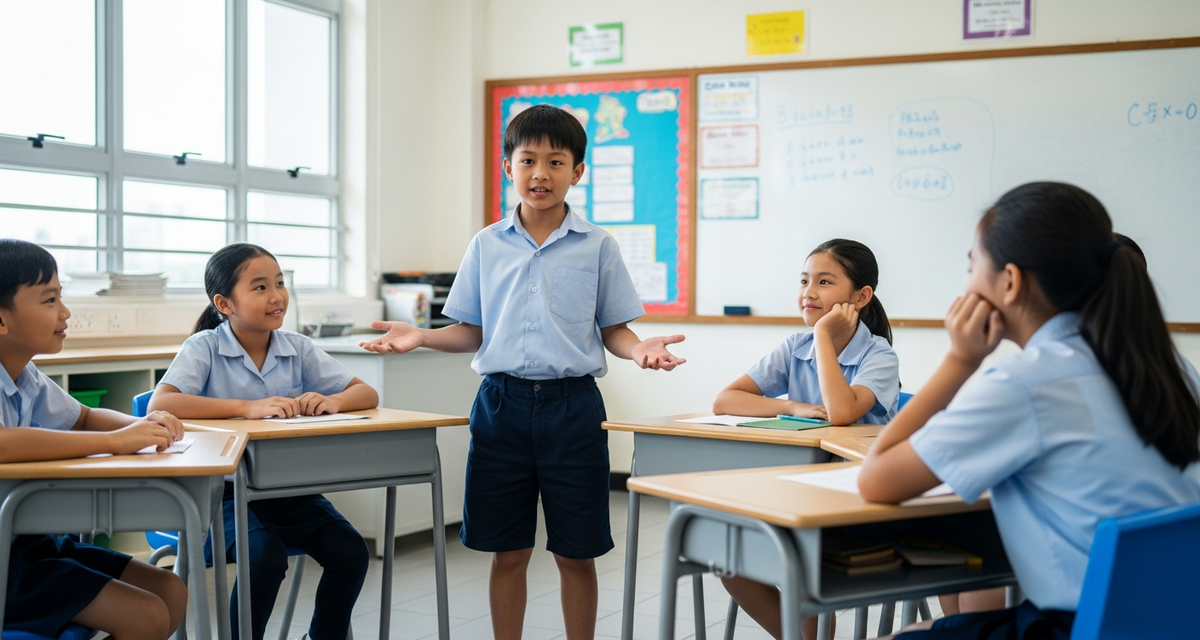
Effective hand gestures emphasise content and convey energy. Ineffective gestures — fiddling with clothes, touching the face, swaying — signal anxiety and distract from the message. The goal is not stillness (frozen hands look robotic) but deliberateness.
Teach three basic gesture types: the "open palm" (used when making an offering or invitation), the "counting gesture" (finger-counting when listing points), and the "size gesture" (using hands to show scale). These three will cover 80% of speaking situations and prevent the fidgeting that undermines credibility.
Facial Expression: Matching Message and Emotion
A blank, expressionless face during a story about excitement or sadness creates cognitive dissonance — the audience doesn't know whether to believe the words or the face. Children who are nervous often suppress facial expression, paradoxically making them appear bored or disinterested.
Practice "expression matching" at home: tell a short story while deliberately matching facial expression to the emotional content. Record and review. Most children are surprised by how minimal their expressions are on video compared to how expressive they felt internally.
Building Body Language Habits Through Our Programmes
Video review is the most powerful tool for body language development. In our public speaking programme, we regularly record student presentations and review them together — positively and constructively. Children who see themselves on video develop body language awareness within 2–3 sessions that would take months to develop through verbal feedback alone.
Our workshops include dedicated body language modules where children practise each element discretely before integrating them into full presentations. The combination of peer observation, trainer feedback, and video review creates the rapid habit change that home practice alone cannot achieve.
A Simple Body Language Practice Plan for Home
Building body language habits does not require elaborate setups or equipment. A simple weekly structure works well: on Monday, practise "the speaker stance" for 30 seconds before any speaking practice — making it the deliberate entry point for every practice session. On Wednesday, record a two-minute explanation of anything (a game, something from school, a book) and review it together, looking specifically for eye contact patterns and gesture habits. On Friday, play a family storytelling game where facial expression must deliberately match the emotional content of the story.
Consistent, low-stakes repetition is what converts conscious effort into unconscious habit. Research on motor skill learning suggests that most children need four to six weeks of deliberate practice before any body language change begins to feel natural rather than performed. Our coaching programme significantly accelerates this timeline — because expert observation catches habits that parents naturally miss, and targeted feedback ensures that practice is correcting the patterns that need to change rather than reinforcing the comfortable defaults that don't.