
Why the Talk Show Format Works for Teens
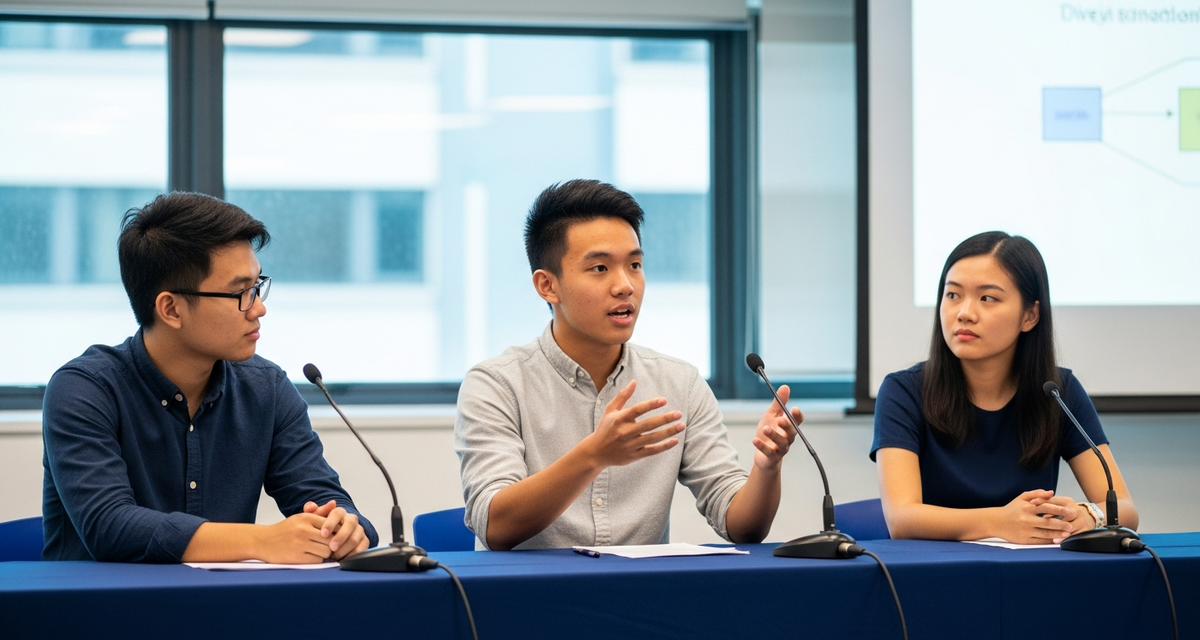
Teenagers are often more willing to engage with discussion formats than traditional speech formats because discussion feels more natural — it mimics the social exchanges they're already having with peers. The talk show format, with its rotating speakers, moderator, and real-time response requirements, captures exactly the kind of dynamic communication that teens find engaging while building the specific skills that formal communication coaching targets.
The format develops: the ability to hold and defend a position under pressure, responsiveness to counterarguments, turn management (knowing when to speak and when to yield), active listening under pressure, and spontaneous, coherent expression — all critical for school interviews, debates, and ultimately professional life.
How to Run a Mini Talk Show at Home
The setup is simple: choose a topic (from the list below or from current events), assign each family member a role (speaker, challenger, moderator), set a 15-minute timer, and let the discussion run. The moderator's job is to keep time, invite quieter participants in, and summarise key points. The speakers argue their positions; the challenger asks probing questions and offers counterpoints.
For the first few sessions, let your teen be the moderator — this role builds active listening and questioning skills without the pressure of having to defend a position. After 3–4 sessions, rotate roles so everyone experiences each position.
20 Talk Show Topics for Youth Discussions
Social and digital life: "Should social media have age limits?", "Is being 'chronically online' a real problem?", "Do influencers have a responsibility to their followers?", "Is cancel culture helpful or harmful?"
School and learning: "Is homework still necessary in 2025?", "Should streaming (academic banding) be abolished?", "Do grades actually measure intelligence?", "Should coding be compulsory in all schools?"
Society and values: "Should teens be allowed to vote?", "Is it okay to disagree with your parents about major life decisions?", "What does success mean to your generation?", "Should Singapore have a 4-day work week?"
Future and careers: "Will AI take most jobs in the next 20 years?", "Is university still worth the investment?", "What skills will be most valuable in 2040?", "Should gap years be encouraged for all students?"
Wellbeing and lifestyle: "How should schools handle teenage mental health?", "Is competitive sport doing more harm than good?", "Should junk food advertising be banned?", "Is it okay to prioritise rest over productivity?"
Connecting Discussion Skills to Interview Preparation
The skills developed in talk show discussions are directly transferable to interview contexts — particularly the DSA interviews, school leadership selection processes, and university applications that Singapore teens navigate. Our interview preparation programme builds on exactly these discussion skills, with specific coaching on how to handle unexpected questions, how to maintain composure under pressure, and how to demonstrate thinking quality in real time.
Using Discussion Practice Alongside Formal Coaching
Home discussion practice is most effective when complemented by structured coaching that provides expert feedback on specific areas — argument quality, response timing, clarity of expression. Our public speaking programme for teens and our workshop formats both incorporate significant discussion and debate components specifically designed for secondary school students.
From Discussion Skills to Real-World Communication Confidence
The transfer from home discussion practice to real-world confidence is not automatic — it requires deliberate bridging. After a family discussion session, ask your teen: "Was there a moment where you felt you expressed your view clearly? Was there a moment where you felt stuck?" This reflective habit builds metacognitive awareness — the ability to observe one's own communication and identify what to develop next. Metacognitive communicators improve faster than those who practice without reflection.
Singapore teens who develop genuine discussion skills carry a significant advantage into DSA interviews, scholarship panels, JC orientation, and eventually university seminars and professional meetings. These contexts all require the same core abilities: the willingness to express a view, the capacity to defend it with evidence, the flexibility to engage with a counterpoint, and the composure to do all three simultaneously under social scrutiny. The family dinner table is a remarkably powerful training ground for all four — when the conversations are intentional, consistently practised, and progressively more challenging over time. Our programme and interview preparation coaching build directly on the discussion skills developed in home sessions, with expert feedback that accelerates the development of exactly these real-world communication competencies.