

Two Terms Parents Use Interchangeably — But Shouldn't
"Build my child's confidence" and "improve my child's self-esteem" are often used as synonyms in parent conversations. But they refer to distinctly different psychological constructs, and conflating them leads to the wrong strategies being applied to the wrong problems. Understanding the difference is genuinely practical — it changes what you do to support your child.
What Is Self-Esteem?
Self-esteem is your child's global sense of worth as a person — how they feel about who they are, regardless of what they achieve. A child with healthy self-esteem feels fundamentally valued, lovable, and inherently worthy — not because of their grades, performance, or social standing, but simply because of who they are.
Self-esteem is built primarily through loving, consistent relationships (particularly with parents and caregivers), through feeling seen and heard, and through having their emotional experience validated. It's also shaped significantly by how failure and criticism are handled in the family environment. A child who is consistently measured by outcomes — praised extravagantly for achievements, criticised sharply for failures — develops conditional self-esteem: "I am worthy when I succeed."
What Is Self-Confidence?
Self-confidence is domain-specific belief in one's ability to succeed at a particular task or in a particular context. "I am confident that I can deliver this presentation," "I am confident in my mathematical ability," "I am confident that I can make friends in a new environment." It's built through mastery experiences — repeated successful engagement with a specific type of challenge.
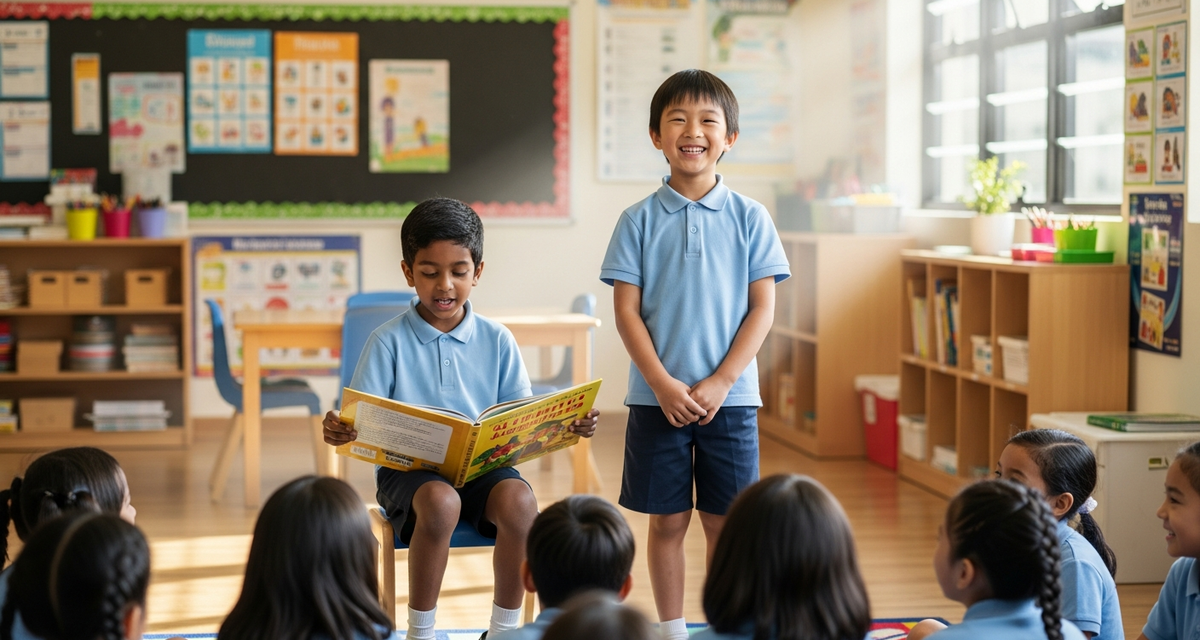
This is why public speaking coaching develops speaking confidence specifically: the skill is practised, feedback is received, improvement occurs, and the child's belief in their speaking ability updates. Confidence is always contextual — a child can be completely confident on a football pitch and acutely anxious at a school presentation.
How Deficits Show Differently in Children
Low self-esteem typically manifests as: persistent global self-criticism ("I'm not good at anything"), difficulty accepting compliments, attributing successes to luck, sensitivity to any critical feedback, and a pervasive sense of being "less than" peers. These patterns are present across contexts and not tied to any specific activity.
Low self-confidence manifests as: situation-specific avoidance ("I can't do presentations"), anxiety that's context-dependent (present before speaking, absent when doing art), resistance to specific challenges while embracing others, and positive self-perception in other domains alongside the anxiety. Understanding which pattern your child shows tells you which type of support is most needed.
Practical Exercises for Each
For self-esteem: Create daily moments of unconditional positive regard — compliments about who they are, not what they do. "I love the way you care about people," "I love your curiosity," "I love how you think." Ensure mistakes are met with curiosity rather than criticism: "What happened? What would you do differently?" not "Why didn't you...?"
For self-confidence: Create regular, structured opportunities to practise the specific skill they're anxious about — in low-stakes settings first, with graduated challenge, and with specific positive feedback after each attempt. For speaking confidence specifically, this might mean starting with family dinner sharing, then expanding to slightly larger audiences, then to more structured formats.
Why Building One Strengthens the Other
Self-esteem and self-confidence are mutually reinforcing. Healthy self-esteem provides the emotional safety to attempt new challenges (including speaking in public) without catastrophic fear of failure. Growing self-confidence in visible, meaningful domains feeds back into self-esteem — the child who successfully speaks in front of 20 people updates their self-concept: "I can do hard things."
This is why our programme consistently reports broader wellbeing improvements alongside speaking skill development. The two systems are intertwined. Track your child's development across both dimensions with our communication skills progress tracker.
What to Do When Progress Feels Slow
Parents often become concerned when self-esteem or confidence development seems to plateau despite consistent effort. This is normal. Both dimensions develop unevenly — periods of visible progress followed by consolidation phases where little seems to change on the surface. The temptation at this point is to intensify the intervention, but this often adds pressure rather than momentum. The more productive response is to maintain the existing practices, reduce explicit attention to the goal, and introduce a new context where success is genuinely likely.
A child whose speaking confidence has plateaued in the classroom may experience a significant jump when given a low-pressure leadership role in a family or community context — running a family game night, explaining something they know well to a younger sibling, or presenting their own project to grandparents. These cross-context wins break the internal narrative of "I'm the anxious speaker" and provide new evidence that the capability is genuinely expanding. When progress resumes, it typically catches up quickly. Patience during the plateau is one of the most important and undervalued parenting skills in this domain.