
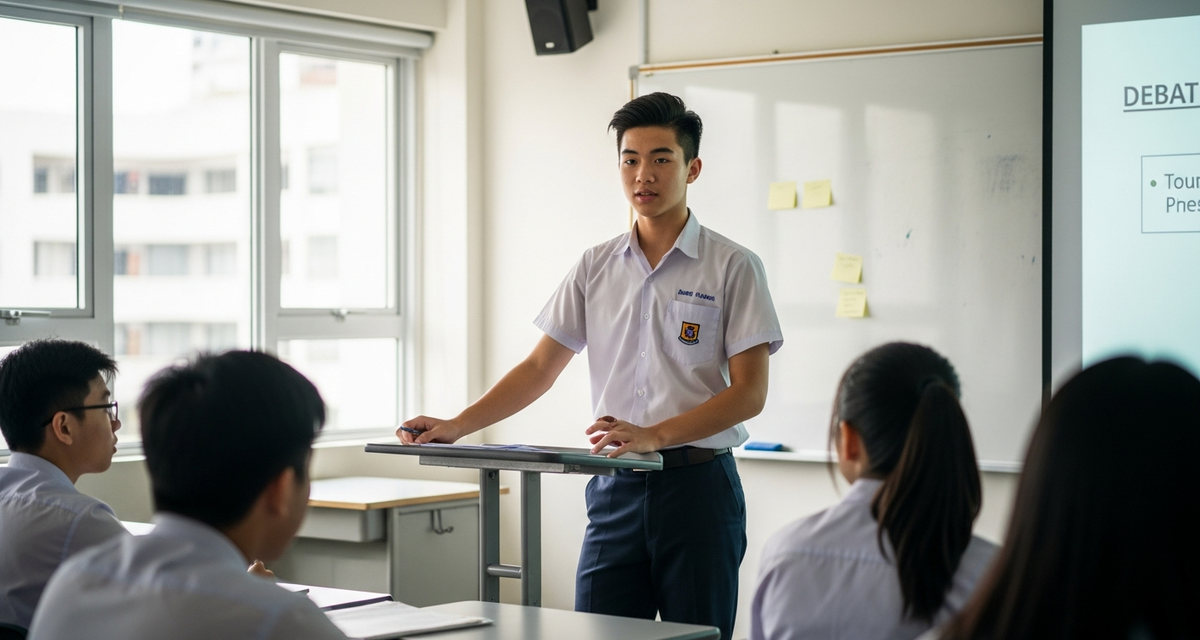

Why Teens Often Regress in Speaking Confidence
Many parents notice something puzzling: their child spoke confidently and freely at age 8, but by age 13 becomes reluctant to speak in front of others. This apparent regression is not a personal failure — it is neurologically predictable. During adolescence, the brain's social threat detection system becomes dramatically more sensitive. The peer group's opinion shifts from background noise to existential concern. The stakes of "saying something wrong" feel genuinely high, because in the adolescent social environment, they sometimes are.
Understanding this helps parents respond with targeted support rather than confused frustration. Singapore's secondary school environment amplifies these pressures: DSA applications, CCA leadership elections, oral examinations, and the constant background noise of academic ranking all create a context where speaking mistakes feel consequential. The strategies below are tailored to the adolescent brain and the specific landscape Singapore teens navigate.
Making It Relevant: Connecting Speaking to Goals They Care About
"You should improve your public speaking" lands very differently from "Better communication skills will help you get the CCA leadership role you want" or "This is directly relevant to your DSA application." Teens respond to relevance, not abstract virtue. Identify the specific goal your child cares about — scholarship interviews, social confidence, debating, leadership positions — and draw the explicit connection to communication development.
Many teens also carry the fear of peer judgement silently, believing it makes them weak. Normalising it removes the shame layer that often makes the fear larger than the reality: "It is completely normal and developmentally expected to feel more self-conscious about speaking in secondary school." Once acknowledged, the fear becomes workable rather than paralysing. This conversation alone — done respectfully, without minimising — often produces significant relief and renewed openness to practice. Teens who understand the neuroscience of social self-consciousness are consistently better equipped to work with it.
Finding the Right Learning Environment
For most teenagers, parental coaching on communication carries too much emotional charge to be fully effective. A structured programme with an experienced trainer who is not emotionally invested in the outcome creates a safer learning environment. Our public speaking programme for teens specifically addresses the secondary school communication landscape — debate preparation, interview skills, presentation structure, and managing visible anxiety under assessment conditions.
Teens also respond well to peer speaking environments where everyone is learning simultaneously. The classroom format — one person presents while 30 others observe and quietly judge — is the highest-stakes possible scenario. Small-group practice with four to six similarly positioned peers (all developing, none performing) creates the safe space where genuine risk-taking and learning can happen. Our workshop formats are designed with exactly this peer-group dynamic in mind, creating accountability without the paralysing exposure of traditional classroom presentations.
Building Intellectual and Interview Confidence
Teens who feel intellectually unprepared to defend their ideas experience disproportionate anxiety when asked to speak. Building argument structure — learning to construct a claim, support it with evidence, and address counterarguments — creates the intellectual foundation that delivery confidence can then build on. Content clarity reduces delivery anxiety significantly. A teenager who knows exactly what they want to say, and why it is defensible, presents far more confidently than one who has a vague idea but polished delivery.
Singapore's secondary school landscape includes significant interview contexts: DSA applications, school prefect selections, scholarship applications, and eventually polytechnic and university interviews. These high-stakes impromptu speaking situations benefit enormously from structured preparation. Our interview preparation programme addresses these specific formats with targeted coaching — practising the behavioural and situational questions that assessors use, and building the structured answers that create positive impressions under pressure.
Sustaining Growth Through Consistency
Teens who aim for perfection before they will speak publicly never start. Reframe the goal: "Every time you speak, regardless of how it goes, you are building something." Consistency of practice — imperfect, repeated, ongoing — produces the genuine confidence that waiting for perfection never achieves. Celebrate effort and consistency explicitly, not just polished outcomes. This reframing is one of the most important mindset shifts a parent can help a teenager make, and one of the most enduring contributions to their long-term confidence.
Parents who track their teenager's speaking moments over several months — not evaluating each individual speech in isolation, but observing the overall trajectory — consistently report that the growth is real, cumulative, and deeply affecting their child's confidence in school and beyond. Our workshop programmes are structured specifically to celebrate growth at every level, creating the safe environment where Singapore teens can take risks without fear of judgement and build the communication skills that will serve them for life.