
Why Age Matters More Than Most Parents Realise
The strategies that build speaking confidence in a 6-year-old are different from those that work for a 10-year-old — which in turn differ significantly from what motivates a 14-year-old. Child development is not a continuous slope; it involves distinct cognitive, social, and emotional shifts that change what children need from adults and from structured programmes.
Using age-inappropriate strategies is one of the most common reasons parents feel their efforts "aren't working." The approach isn't wrong — the application is. This guide gives you specific, developmentally grounded strategies for each key stage.
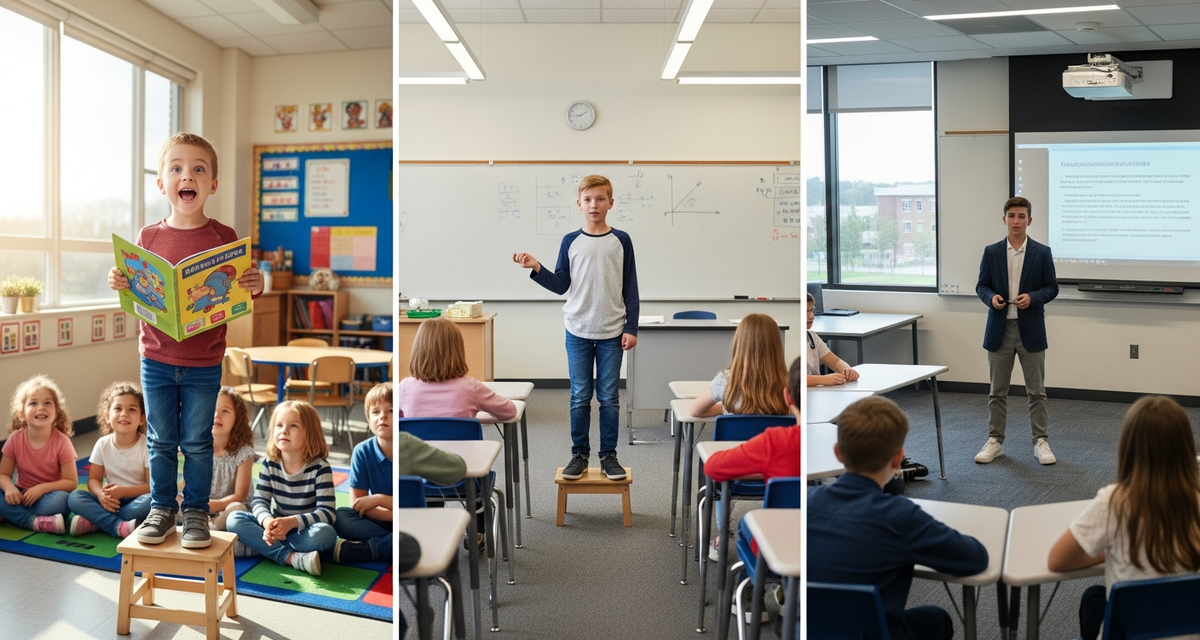
Ages 5–7: Expression and Comfort Come First
Children in this age group are still mastering spoken language itself — vocabulary, sentence construction, narrative sequencing. Building speaking confidence here means creating positive associations with verbal expression, not teaching technique. Celebrate volume, enthusiasm, and any attempt to share an idea verbally.
Effective activities: show-and-tell with a favourite toy, "tell me about your day" conversations, storytelling with picture prompts, and the "what happened at school?" retelling ritual. The goal is that your child associates talking with warmth, attention, and positive feedback — not performance pressure.
Ages 8–11: Structure and Skill Begin
Children in this range can understand and apply feedback. They can hold a three-part structure (opening, points, conclusion) in mind. They're beginning to be aware of peer judgment, which makes carefully designed group experiences important. This is the optimal window for beginning structured public speaking coaching.
Our public speaking programme is most impactful for this age group because children are cognitively ready to learn technique, emotionally invested in improvement, and still young enough that anxiety patterns haven't fully solidified. Video recording becomes a powerful tool — children this age are highly responsive to watching themselves and self-correcting.
Ages 12–16: Autonomy and Relevance Are Essential
Teenagers don't respond to "I think you should improve your public speaking." They respond to "Here's how better communication skills will help you get the leadership position you want" or "This is directly relevant to your DSA application." Connecting public speaking development to something they personally care about is non-negotiable.
For secondary school students, specific formats become important: debate, interview simulation, group presentations, and structured argumentation. Our interview preparation programme is particularly popular with Secondary 1–5 students preparing for school interviews, scholarship applications, and leadership selections.
How Parental Approach Must Change With Age
With young children, parents are the primary audience and primary source of feedback. Direct coaching, enthusiastic encouragement, and setting up practice opportunities are all appropriate. As children enter adolescence, this role must shift. Teenagers who receive unsolicited performance feedback from parents typically disengage — the feedback carries too much emotional charge.
The transition is: from primary coach (ages 5–10) to supportive resource (ages 10–13) to informed backer (ages 13–17). This means arranging access to good coaching rather than doing the coaching yourself; creating opportunities without enforcing them; and celebrating outcomes without dwelling on process.
When to Enrol in a Structured Programme
A structured programme adds the element that home practice cannot: expert feedback, peer learning, and progressive challenge with professional calibration. The ideal time to enrol is when you notice a child expressing frustration at their inability to express themselves, avoiding speaking opportunities they would otherwise welcome, or facing an upcoming milestone (PSLE oral, school interview, competition).
Our workshops and holiday camps offer a flexible entry point — concentrated, immediately impactful, and available across school holidays. They're an excellent way to assess whether structured coaching is right for your child before committing to a full term programme.
A Practical Starting Point for Every Age
Whatever your child's current age and confidence level, there is a practical starting point today. For ages 5–7: introduce a "sharing moment" at dinner tonight where your child tells the family one thing from their day. For ages 8–11: give them a random topic and ask for a 60-second response — any structure, any content, just speaking aloud. For ages 12–16: ask them to teach you something they know well for five minutes. Each of these is a low-stakes, immediately actionable first step that costs nothing and risks nothing.
Building speaking confidence is a gradual process, but it is not a mysterious one. The progression from "can speak to two people comfortably" to "can speak to twenty" follows a predictable arc when practice is consistent and feedback is supportive. Parents who understand the age-specific developmental needs outlined above become significantly more effective coaches — reinforcing independence rather than dependency, and stretching rather than overwhelming their child at every stage. Our programme is available for children aged 5 to 17, designed around exactly these developmental realities.