
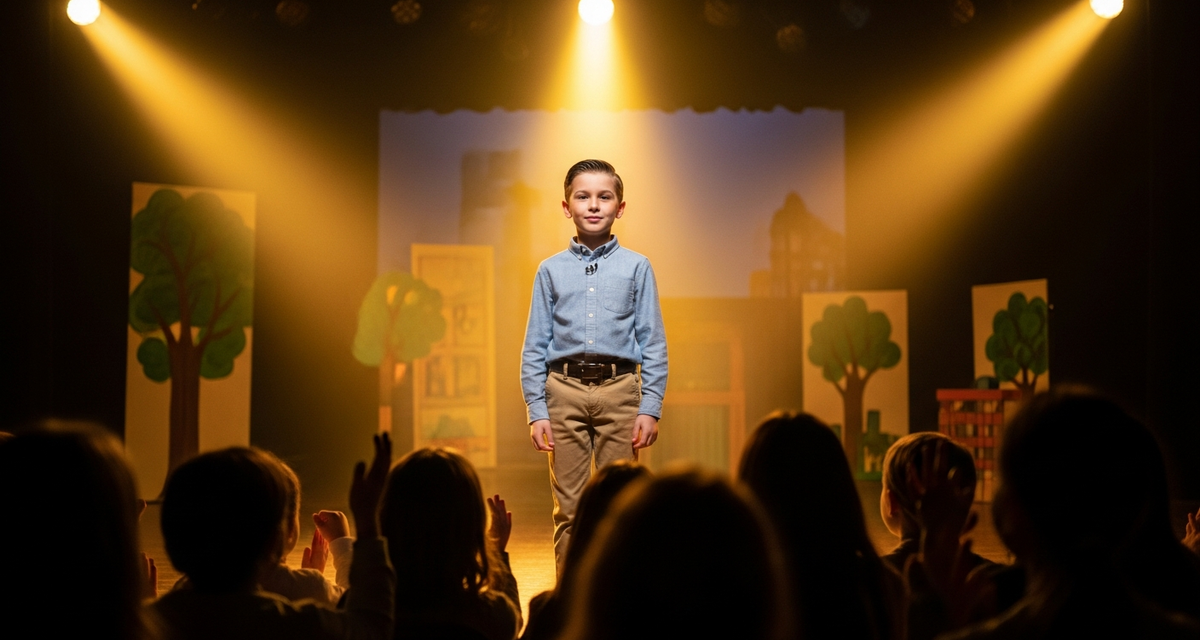

Stage Confidence Is Different from Classroom Confidence
A child can be entirely comfortable presenting in a classroom — where they know their classmates, the physical space is familiar, and the format is predictable — and still experience overwhelming stage fright at a school concert, speech day, or drama performance. The differences are real: stage lighting can make it impossible to see the audience, the formal performance context activates different social anxiety triggers, and the perceived stakes ("hundreds of people watching") are categorically higher.
Stage confidence requires specific preparation that goes beyond general public speaking practice. This guide addresses the unique elements of stage performance that many children find most challenging.
Why Children Freeze on Stage Even After Thorough Preparation
Stage anxiety triggers the brain's threat response — adrenaline floods the system, which narrows working memory and can override prepared material. A child who knows their lines perfectly in rehearsal may find them completely inaccessible the moment the stage lights come on and the audience falls silent. This is physiological, not psychological weakness — it happens to professional performers too.
The solution is not more preparation (more lines memorised) but better pre-performance regulation — teaching the nervous system to interpret stage conditions as challenging-but-manageable rather than threatening.
The Pre-Performance Routine: Creating a Reliable Anchor
A consistent pre-performance routine tells the brain: "I've been here before, and it went fine." The routine itself is less important than its consistency. Effective elements: a specific breathing sequence (4 counts in, 6 out, 3 repetitions), a physical grounding moment (feet flat on floor, feeling the pressure), one confident self-phrase ("I've practised this. I'm ready."), and, ideally, a moment of deliberate physical movement (a short walk, shaking hands gently) to dissipate the adrenaline physically.
Practise this routine in the weeks before the performance — not just immediately before. The routine becomes more effective through repetition in low-stakes settings first.
Visiting the Venue and Rehearsing in Context
Where possible, have your child visit the performance venue before the event. Walking the stage, standing at the microphone, looking out at the empty seats — these experiences make the unfamiliar familiar. If a venue visit isn't possible, a full dress rehearsal in front of a small, trusted audience (family, close friends) with as many performance elements as possible (costume, microphone, lighting) serves the same purpose.
Recovering from Mistakes on Stage
Teach your child one specific recovery technique for each type of stage mishap they're most worried about. For a memory blank: pause, breathe, say "Let me take a moment" (this communicates deliberateness, not panic), then continue from the point they remember. For a missed cue: stay in position, maintain character or composure, wait for the next natural entry point. For an unexpected event (technical failure, dropped prop): acknowledge it lightly if appropriate, continue with calm composure — the audience always respects composure over panic.
What Parents Should (and Shouldn't) Say Before a Performance
The most helpful parental contribution immediately before a performance is minimal. Keep it simple: "You've practised, you're ready, enjoy it." Avoid last-minute advice, specific reminders about technique, or any phrasing that references the possibility of failure. A calm, confident parental presence communicates more than any pep talk — your child reads your energy as data about the situation's threat level.
After the performance: celebrate the attempt fully before any feedback. "I was so proud watching you up there" before any specific comments. This timing matters — it ensures that the emotional memory of the experience is positive regardless of technical outcome. Our programme and workshops both include performance opportunities specifically designed to build stage confidence in this gradual, supported way.
Building a Pattern of Positive Stage Experiences Over Time
Stage confidence is not built in a single performance — it is built across a pattern of performances, each one adding to a growing collection of evidence that "I can do this." The most important parental investment is not finding the perfect preparation technique but ensuring that your child has regular, low-stakes performance opportunities from a young age. School events, family gatherings, community occasions — each one is a genuine stage experience that accumulates into a confident stage identity.
Children who have performed many times in many settings carry this accumulated experience into high-stakes moments with measurably greater composure than those for whom every performance feels like the first. School of Confidence's structured programme creates this accumulation systematically — regular in-class speaking, workshop performances, and organised events that give students the volume of positive stage experiences that builds genuine confidence from the inside out.